

When you hear the term “legacy planning,” what comes to mind? For many, it’s a concept wrapped up in estate law and finances, something reserved for the ultra-wealthy. But after spending more than 50 years guiding families, I’ve seen firsthand that it’s so much more than that. It’s the deeply human process of deciding how you’ll transfer not just your assets, but your values and wisdom to the next generation.
Think of it as providing a guiding compass for your family's future, ensuring your life's work continues to nurture your loved ones long after you're gone. It’s a profound act of love.
What Is Legacy Planning Beyond Your Finances?
So many people get legacy planning and estate planning confused, and it's an easy mistake to make. An estate plan handles the legal and financial nuts and bolts—the "who gets what" of transferring your assets. A legacy plan, on the other hand, answers a much deeper question: What impact do you want to leave on the world? It’s about the message your money sends and the principles you hope to instill.
Here's an analogy I like to use: building a bridge. Your estate plan provides the steel beams and concrete—the essential, non-negotiable structure. But your legacy plan is the bridge's design, its purpose, and all the beautiful details that make it uniquely yours. It ensures future generations can cross securely, guided by the values you’ve laid down for them.
Before we dive deeper, here's a quick overview of the key components.
Legacy Planning at a Glance
This table breaks down the core elements of a legacy plan, showing what each piece is and why it's so critical for a holistic approach.
| Component | What It Is | Why It Matters |
|---|---|---|
| Estate Plan | The legal framework (will, trust, etc.) for asset transfer. | Provides the essential structure to carry out your wishes and avoid probate. |
| Values & Stories | Articulating your core principles, life lessons, and family history. | Leaves a moral and emotional inheritance, guiding future generations. |
| Philanthropy | Your strategy for charitable giving, both now and after you're gone. | Extends your impact beyond your family to causes you care about. |
| Mentorship | Intentionally passing down wisdom, skills, and professional guidance. | Prepares your heirs to be responsible stewards of their inheritance. |
Ultimately, a complete legacy plan integrates all these elements to create a lasting, positive influence.
More Than Just Money
A true legacy plan is a holistic roadmap that tells your entire story. It gives your loved ones clarity and purpose, which is the best defense against the confusion and conflict that purely financial instructions can sometimes create. It’s about making sure your influence is a source of strength, not stress.
This process involves clearly articulating and documenting:
- Your Values: The core principles that guided your life, like hard work, generosity, or the importance of education.
- Your Stories: The life lessons, family history, and personal experiences that shaped you.
- Your Hopes: Your aspirations for your children, grandchildren, and your community.
"True legacy planning isn't about what you leave to your family, but what you leave in them. Over my 50+ years of experience, I've seen that the most enduring legacies are built on a foundation of clear values and intentional communication."
A Growing Need for Clarity
This thoughtful approach is more important than ever. According to a recent Northwestern Mutual study, 31% of U.S. adults now plan to leave an inheritance, up from 26% the year before. Interestingly, the number of people expecting an inheritance has actually dropped, which points to a major disconnect that clear planning can solve. Read more about these inheritance trends.
Asking "what is legacy planning" is the first step toward creating a meaningful impact that stands the test of time. It's about taking control of your narrative and giving peace of mind to yourself and everyone you care about.
If you're looking to build the financial foundation for this journey, our guide on how to create generational wealth is a great place to start. It will help you build a secure future for your family with confidence.
The Building Blocks of Your Legacy Plan
When you start digging into legacy planning, you’ll come across a few key legal and financial tools. It's easy to get intimidated, but don't think of them as complicated legal forms. Instead, picture them as the practical building blocks you'll use to construct a secure future for your family. Each one has a specific, powerful job to do, and when they work together, they create a solid, coordinated plan.
These tools are designed to answer crucial questions before they become problems. Who will manage your affairs if you can't? How do you make sure your assets go directly to your loved ones without getting stuck in public court proceedings? Let's break down the most important components.
Your Will: The Final Instruction Manual
A last will and testament is probably the most familiar piece of the puzzle. It’s your final instruction manual—a legally binding document that outlines exactly how you want your property distributed after you pass away. It also handles other critical jobs, like naming a guardian for your minor children, which is easily one of the most important decisions any parent can make.
But a will isn’t a silver bullet. It has to go through a court-supervised process called probate, which can be slow, expensive, and completely public. While a will is absolutely essential, it’s often just one part of a much bigger strategy.
Trusts: A Protective Container for Your Assets
If a will is an instruction manual, think of a trust as a protective container you build to hold and manage assets for your loved ones. When you transfer assets into a trust, they're no longer owned by you personally; they're owned by the trust itself. This simple shift has some incredibly powerful results.
The biggest benefit? Assets held in a trust typically avoid probate entirely. This allows for a private, efficient, and often much faster transfer of wealth to your beneficiaries. There are two main types of trusts you'll hear about:
- Revocable Living Trust: You create this during your lifetime and can change or even cancel it whenever you want. You keep total control over the assets inside it, but they’re shielded from the hassles of probate.
- Irrevocable Trust: Once you set this one up and put assets into it, it generally can't be changed. The trade-off for that permanence is it can offer benefits like asset protection from creditors and can sometimes help reduce estate taxes.
For a lot of families, figuring out which one is the right fit is a key part of the process. If you want to go a little deeper, you can learn more about the differences between a living trust and a will in our detailed guide.
Powers of Attorney: Appointing Your Trusted Advocates
What happens if you become unable to make decisions for yourself because of an accident or illness? This is where powers of attorney are absolutely indispensable. These documents let you appoint a trusted person—your "agent"—to step in and act on your behalf.
A common mistake I’ve seen over my 50+ years of experience is families waiting for a crisis to address these issues. Appointing powers of attorney proactively is one of the greatest gifts you can give your loved ones, preventing stressful court proceedings and family conflict during an already difficult time.
You'll need two distinct types:
- Durable Power of Attorney for Finances: This gives your agent the authority to handle your financial life—paying bills, managing investments, filing taxes—if you become incapacitated.
- Power of Attorney for Healthcare: Sometimes called a healthcare proxy, this appoints someone to make medical decisions for you if you can't communicate them yourself.
Without these documents, your family might be forced to go to court to get the authority to help you. That process, known as guardianship or conservatorship, can be costly and emotionally draining for everyone involved.
Healthcare Directives: Making Your Wishes Known
Working hand-in-hand with a healthcare power of attorney is a living will, also known as an advance healthcare directive. This document doesn't appoint a person. Instead, it spells out your specific wishes for end-of-life medical care. It gives clear guidance on treatments you do or do not want, like life support, which relieves your family of the burden of making those agonizing decisions on their own.
Together, these building blocks form the foundation of a plan that not only protects you during your lifetime but also ensures your legacy is carried out exactly as you wanted. This diagram shows how your legacy is so much more than just your money.
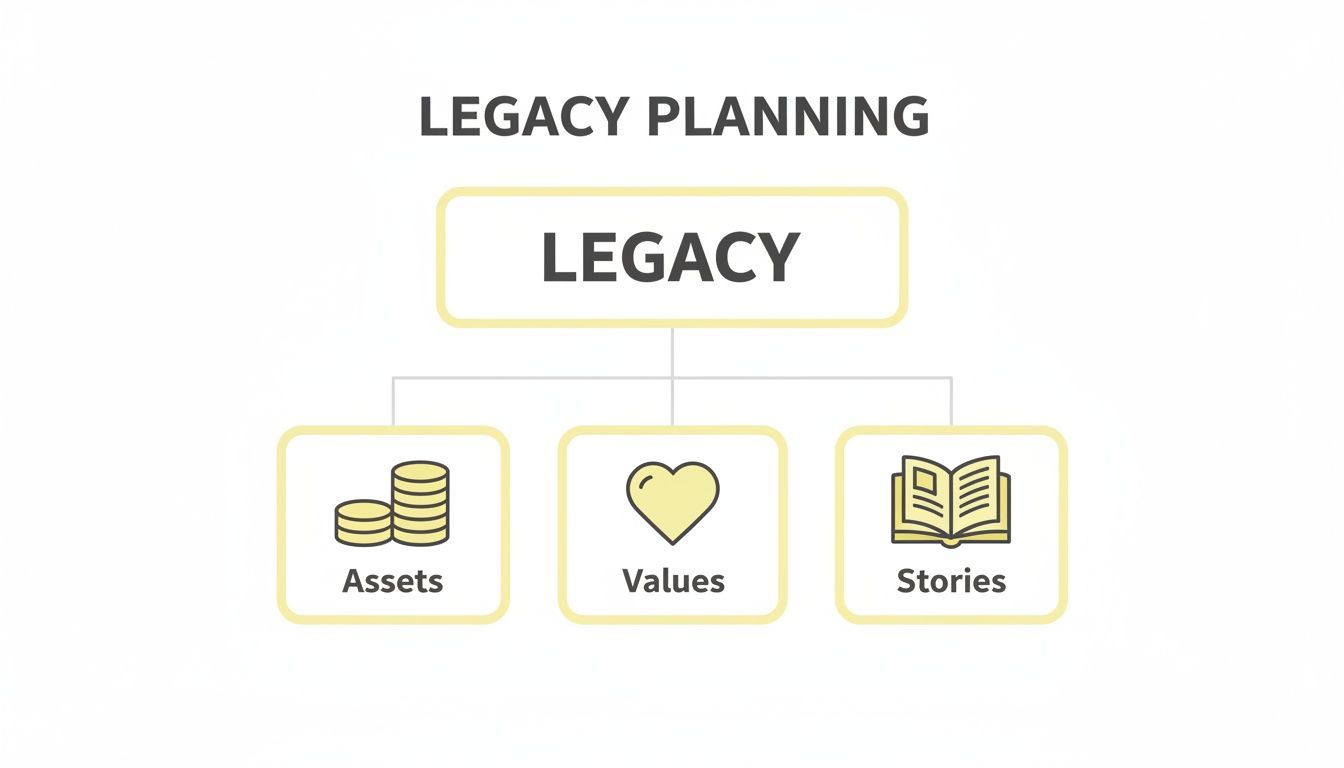
As you can see, a true legacy includes your financial assets, but it's also built on your personal values and life stories. It's about passing on a complete inheritance to the next generation.
Advanced Strategies to Protect Your Legacy
Once you’ve laid the groundwork with the essentials—like a will and a trust—it’s time to look at more specific ways to protect your assets and truly magnify your impact. These advanced techniques go far beyond simply passing things on. They offer powerful, efficient ways to provide for your loved ones, slash tax bills, and ensure a family business lives on.
Think of it like building a house. Your will and trust are the solid foundation. But these advanced strategies? They’re the custom security systems, the reinforced roofing, and the smart wiring that protect your home from specific threats and make it work perfectly for your family. They add layers of precision and thoughtfulness to the whole plan.
Bypass Probate with Beneficiary Designations
One of the simplest yet most effective moves you can make is to properly use beneficiary designations. Many of your most valuable assets, like retirement accounts (your 401(k) or IRA) and life insurance policies, let you name a direct beneficiary.
When you do this, those assets pass straight to the people you name when you die, completely sidestepping the probate process. This is a massive win. It means your family gets access to those funds much faster, without the delays, legal fees, and public nature of court proceedings. It’s a direct, private, and incredibly efficient way to transfer wealth.
The classic mistake here, though, is setting it and forgetting it. Life happens—a divorce, a death in the family—and if you don't update these forms, your assets could go to the wrong person, even if your will says something completely different.
Use Gifting for Tax Efficiency and Immediate Impact
Strategic gifting during your lifetime is another powerful tool in the legacy planning toolbox. This isn’t just about being generous; it’s a shrewd financial strategy that can shrink your taxable estate and let you see the good your wealth can do with your own eyes.
Each year, you can give up to the annual gift tax exclusion amount to as many people as you want without even having to file a gift tax return. The specific amount can change, so it’s always a good idea to stay on top of the current tax laws. For many families, this is a fantastic way to make a difference right now.
- Fund a grandchild's education: You can contribute to a 529 plan or help directly with tuition.
- Help with a down payment: Your gift could be the key that unlocks the door to a child or grandchild's first home.
- Support a new business venture: Your financial backing can give a loved one the start they need to chase their entrepreneurial dreams.
By gifting thoughtfully, you not only chip away at potential estate taxes but you also get to be part of the joy and success that your support creates. To see how this fits into the bigger picture, it helps to understand the basics of the estate tax exemption.
Ensure Business Continuity with Succession Planning
For entrepreneurs, a legacy is often wrapped up in the company they’ve poured their life into building. Succession planning is simply creating a roadmap for a smooth leadership transition, making sure the business continues to thrive for generations to come. It’s a non-negotiable part of legacy planning that protects your employees, your customers, and your family's financial security.
A well-designed succession plan is more than just a business strategy; it's the cornerstone of a lasting family enterprise. It ensures that the values and vision you embedded in your company culture will endure.
The need for this is more urgent than most people realize. It's shocking, but almost two-thirds of family businesses don't have a documented succession plan. The numbers get even scarier: only 30% of small businesses ever manage to sell successfully, and the median close rate on major business-for-sale marketplaces was recently a dismal 6.46%. These stats highlight a huge risk for owners who have invested everything into their companies. Discover more insights about these succession planning statistics.
A solid succession plan answers the tough questions head-on:
- Who is going to take over? Is it a family member, a key employee, or an outside buyer?
- How will the transition be funded? This could involve anything from life insurance to a formal buyout agreement.
- What’s the timeline? A gradual, well-communicated transition almost always works out better than a sudden change.
By tackling this proactively, you transform your business from just a job into a durable asset—a real legacy that can support your family and community for years to come.
Managing Your Digital Legacy in the Modern Age
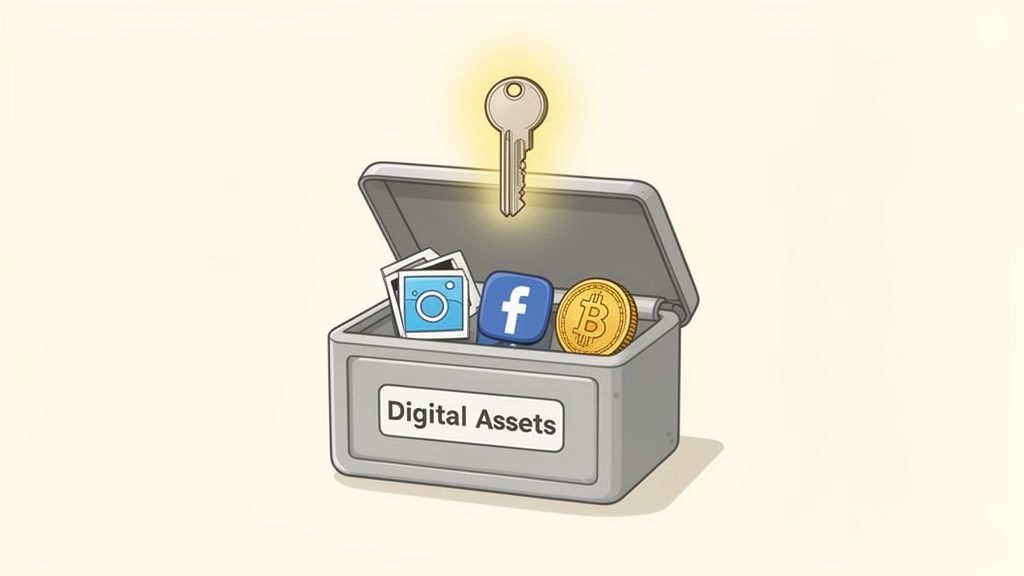
These days, so much of our life is stored online that a legacy plan has to cover more than just physical property and bank accounts. Your digital legacy is a huge, and often forgotten, piece of the puzzle. It’s everything from your social media profiles and family photos in the cloud to online banking logins and cryptocurrency.
Ignoring these assets is like leaving behind a locked treasure chest without giving anyone the key. Your family might know these accounts exist, but without access, they can become a source of massive frustration or, worse, get lost forever. Proper planning makes sure your digital footprint is handled the way you want, not just abandoned.
What Exactly Is a Digital Asset?
A digital asset is pretty much any online record, account, or file you own. The list is longer than most people think and it's growing every single year. A modern legacy plan absolutely must include a full inventory of your online life.
This covers things with clear financial value as well as those that are purely sentimental:
- Financial Accounts: Online banking portals, brokerage accounts, PayPal, and cryptocurrency wallets.
- Social Media: Facebook, Instagram, LinkedIn, and other profiles that hold a lifetime of memories and professional connections.
- Digital Files: Family photos and videos you've stored on services like Google Photos or iCloud.
- Email Accounts: These are often the master key to accessing all your other online accounts.
- Intellectual Property: Any blogs, websites, or online business assets that belong to you.
The sheer volume here shows just how important this has become. The global Digital Legacy Market, already valued at over $26 billion, is expected to rocket to nearly $78 billion in the next decade. That growth tells you how seriously families are starting to take the challenge of passing on digital property. You can dig into the trends in the full report on the digital legacy market.
Creating Your Digital Key Safe
The best way to handle your digital legacy is to create a secure, organized list of your online life—think of it as a "digital key safe" for your loved ones. This doesn’t mean scribbling your passwords on a sticky note. It means creating a secure document that lists your accounts and gives clear instructions on what to do with them.
After 50+ years of helping families plan, I’ve seen that the most overlooked details often cause the most stress. A well-organized digital asset plan is a modern act of love, saving your family from a digital scavenger hunt during a time of grief.
For each asset, your inventory should include a few key pieces of information:
- The Platform: The name of the website or service (e.g., "Facebook," "Gmail," "Coinbase").
- Username/Login Info: Your username or the email address tied to the account.
- Access Instructions: Information on how to log in. It's much safer to point to a secure password manager rather than listing the passwords directly in the document.
- Your Wishes: Clear instructions on what should happen. Should the account be memorialized? Closed down? Should specific photos be downloaded and saved for the family?
Appointing a Digital Executor
Just like you name an executor for your will, you should also appoint a digital executor. This is the one person you trust to manage your online accounts after you're gone. This individual needs to be tech-savvy, responsible, and someone you trust completely to handle your wishes with care.
Choosing this person and giving them legal authority through your will or trust is a critical step. It gives them the power to access, manage, and close your accounts, ensuring your digital life is handled respectfully and securely. It's the final piece of a truly thoughtful legacy plan.
The Heart of Your Legacy: Your Values and Stories
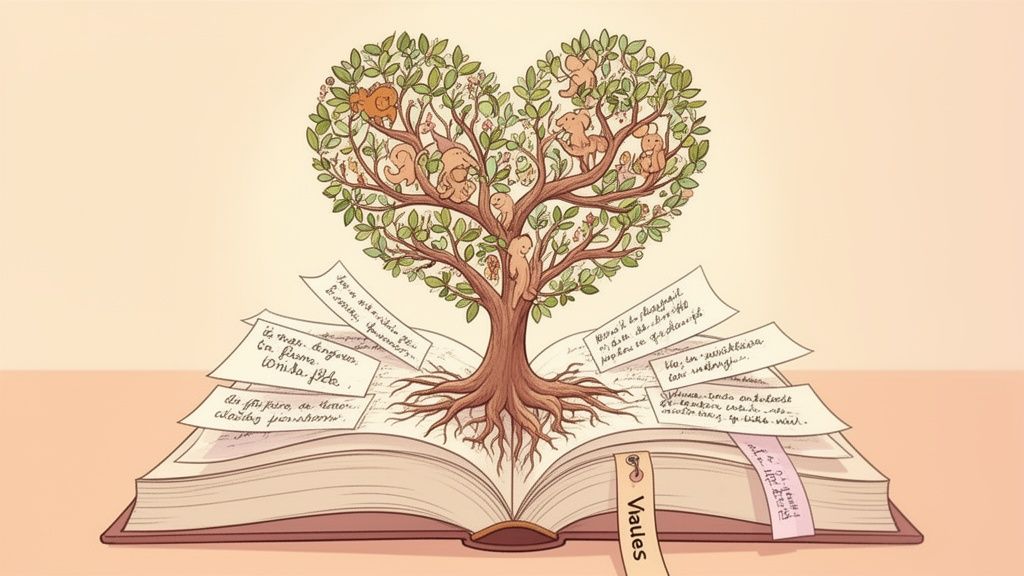
While legal documents and financial strategies build the skeleton of your plan, the real heart of your legacy is something far more personal. It’s found in the values you lived by, the stories you told, and the lessons you learned along the way.
These are the intangible gifts your loved ones will cherish most deeply. They become a moral compass, guiding them long after you’re gone. Answering the question "what is legacy planning" fully means looking beyond assets to capture the essence of who you are and ensuring your influence is felt not just in what your family inherits, but in who they become.
The Power of an Ethical Will
One of the most powerful ways to pass on this non-financial legacy is through an ethical will, sometimes called a legacy letter. This isn't a legal document that distributes property. Instead, it’s a personal message that shares your wisdom, your principles, and your hopes for the future, directly with your family.
Think of it as the ultimate gift of clarity and love. It’s your chance to say the things that often go unsaid, articulating the beliefs that shaped your life and your dreams for the generations that follow.
"Over my 50+ years of experience, I've seen that the message money sends is powerful, but the message from the heart is permanent. A legacy letter ensures your voice and values continue to guide your family, providing comfort and wisdom when they need it most."
This letter can be a written document, a video, or even just an audio recording. The format doesn’t matter nearly as much as the heartfelt content inside, creating a timeless connection between you and the people you love.
Capturing Your Most Important Lessons
Figuring out what to include can feel a bit daunting, but it doesn't have to be a complicated task. The goal is simply to be authentic. You can start by reflecting on a few prompts to get your memories and insights flowing.
Here are some questions to consider as you begin to outline your ethical will or legacy letter:
- Guiding Principles: What are the most important principles that guided your life decisions, both personally and professionally?
- Life Lessons: What’s the most significant lesson you learned from a failure? And what did you learn from your greatest success?
- Family Values: What does being a member of this family mean to you? What traditions or values do you hope will continue?
- Wisdom for the Future: If you could give your grandchildren one piece of advice to carry with them through life, what would it be?
- Expressions of Love: What do you love, respect, or admire most about each person in your family?
These prompts aren’t a checklist to tick off; they're just a starting point for introspection. Your answers will shape the story of a life well-lived, preserving your unique perspective and ensuring your legacy is a true reflection of everything you stood for. This is how you leave a gift that truly keeps on giving.
Your Actionable Legacy Planning Checklist
Knowing the “what” and “why” of legacy planning is a great start, but the real magic happens when you turn that knowledge into a concrete plan. I know it can feel like a massive undertaking, so let's break it down into a simple, step-by-step roadmap.
Think of this as a series of calm, intentional actions—not a final exam. Each step you take builds a little more security and a lot more peace of mind for your family.
Step 1: Take a Comprehensive Inventory
Before you can map out a journey, you have to know your starting point. The first thing to do is get a clear, honest picture of everything you own. This isn't just about the big-ticket items; it's about creating a complete financial snapshot for your loved ones.
Your inventory should cover all the bases:
- Financial Accounts: Jot down every bank account, retirement fund (401(k)s, IRAs), brokerage account, and life insurance policy.
- Real Estate: List your primary home, any vacation properties, and all investment real estate.
- Personal Property: Don't forget significant items like vehicles, jewelry, art collections, and meaningful family heirlooms.
- Digital Assets: As we talked about, make sure to include online accounts, cryptocurrency, and important digital files.
This document is the bedrock of your entire plan. It ensures nothing gets missed.
Step 2: Define Your Legacy Goals
Once you have a handle on your assets, it’s time to think about your goals. What, exactly, do you want your legacy to do? This is where you shift from the "what" to the "why" of your plan.
After 50+ years of guiding families through this, I can tell you that the plans that work best are the ones rooted in crystal-clear intentions. Your goals give us the direction we need to craft documents that truly reflect what you value and what you hope for your family’s future.
What matters most to you? Is it securing your spouse's retirement? Funding a grandchild's education? Supporting a cause you're passionate about? Or maybe it's ensuring the family business transitions smoothly. Writing these goals down gives your team a clear vision to build from.
Step 3: Assemble Your Professional Team
Let’s be clear: legacy planning is not a DIY project. To make sure your plan is legally sound and financially efficient, you need a team of trusted advisors in your corner. These pros work together, each bringing their own expertise to protect your interests.
Your core team will usually include:
- An Estate Planning Attorney: This is the expert who will draft your will, trusts, and other legal documents, making sure your wishes are legally locked in.
- A Financial Advisor: They’ll help you line up your financial strategy with your legacy goals, focusing on everything from investments to tax efficiency.
- An Accountant or CPA: This professional is key for navigating the tax implications of your decisions, helping you preserve as much of your estate as possible for your heirs.
Step 4: Schedule Regular Reviews
Finally, please remember that a legacy plan is a living document, not a "set it and forget it" task. Life changes, and your plan needs to change with it.
Plan to review everything every 3-5 years, or anytime a major life event happens—like a marriage, the birth of a child, a divorce, or a big shift in your financial situation. These regular check-ins ensure your plan stays relevant and effective, always reflecting what you want.
Still Have Questions About Legacy Planning?
Even after laying out all the pieces, it's natural for questions to bubble up. That’s a good thing—it means you’re taking this seriously. Let’s tackle some of the most common questions I've heard over the years to clear up any lingering doubts and help you move forward.
When Is the Right Time to Start Legacy Planning?
Honestly? The best time is always right now, no matter your age or how much you have in the bank. Life has a way of throwing curveballs when we least expect them, and having a solid plan in place gives your loved ones immediate security.
Think of it this way: key life events are natural triggers. Getting married, having a baby, or starting a business are perfect moments to put a plan together. It’s a mistake to view legacy planning as some far-off, end-of-life task. It’s really a fundamental part of your financial strategy that protects your family at every single stage of life.
Do I Need a Lot of Money to Create a Legacy Plan?
Absolutely not. This is one of the biggest and most stubborn myths out there. Legacy planning is for everyone, not just the ultra-wealthy.
A plan simply ensures that whatever you have—whether it’s a house, a savings account, or treasured family heirlooms—is passed on exactly how you want. This cuts down on stress and potential arguments for your family. More importantly, it covers priceless decisions like naming guardians for your kids, which has nothing to do with money at all.
A common mistake I’ve seen over my 50+ years is people thinking they don’t have “enough” to need a plan. The truth is, a plan's value is measured in the peace of mind it gives your family, not the size of your bank account.
How Often Should I Review My Legacy Plan?
Your legacy plan should be a living, breathing document that evolves right along with you. It’s never a "set it and forget it" project you can just file away and ignore.
As a general rule, it’s a good idea to review your entire plan every 3-5 years. But even more important is revisiting it any time a major life event happens.
- Family Changes: A marriage, divorce, the birth of a child, or a death in the family can completely change the game.
- Financial Shifts: Any significant jump or drop in your financial situation means it's time for a review.
- Relocation: Moving to a new state can have huge implications, since estate laws can vary dramatically from one place to the next.
These regular check-ins make sure your plan always reflects what you want and what’s going on in your life, keeping it effective and relevant for protecting your family’s future.
At Smart Financial Lifestyle, we believe that making smart financial decisions is the key to building a meaningful legacy. Our approach combines practical wisdom with timeless principles to help you secure your family's future with confidence. Start building your legacy with us today.
