Is Santa Fe a Good Place to Retire? Costs, Lifestyle & Tradeoffs
You're mapping out your retirement dream, and you've heard whispers about Santa Fe's enchanting high desert sunsets and rich cultural scene. But before you pack your bags, you're wrestling with crucial questions about the cost of living, healthcare access, climate considerations, and whether this artistic haven truly matches your retirement vision. Understanding which month is best to retire can influence everything from your relocation timeline to your ability to maximize Social Security benefits, especially when you're considering a move to Santa Fe, with its distinct seasons and housing market fluctuations.
Making smart choices about your retirement destination requires more than just falling in love with a place during a weekend visit. Retirement financial planning serves as your compass through these decisions, helping you evaluate whether Santa Fe's higher altitude living costs align with your budget, whether the dry climate suits your health needs, and how your retirement income will stretch in this popular destination. By examining your financial picture alongside Santa Fe's unique characteristics, you can determine if the tradeoffs between cultural richness and practical considerations make sense for your specific situation.
Summary
Santa Fe's median home value sits around $570,000 to $600,000 according to Zillow's 2025 Home Value Index, compared to the national median of approximately $410,000. That $160,000 to $190,000 premium represents years of retirement income compressed into a single purchase decision. For retirees drawing from pensions, Social Security, and retirement accounts with planned withdrawal rates, this housing cost creates the primary friction point between aesthetic appeal and financial sustainability.
High-altitude living at 7,000 feet demands physical adjustment that vacation visits don't reveal. Thinner air affects stamina, sleep quality, and cardiovascular function in ways you won't fully understand until living there full-time. According to the U.S. Centers for Disease Control and Prevention, older adults with pre-existing heart or lung conditions may experience more pronounced altitude-related effects, including shortness of breath, fatigue, and disrupted sleep patterns that persist beyond initial acclimation.
Healthcare infrastructure gaps become more significant as retirement progresses. Complex cardiac procedures, advanced cancer treatments, or rare condition specialists often require travel to Albuquerque (60 miles away) or further. Managing chronic conditions requiring frequent specialist visits transforms a one-hour drive into a recurring logistical burden that consumes time, energy, and money, particularly when mobility becomes limited or driving becomes unsafe.
New Mexico's tax structure affects retirement income differently depending on your financial profile. The state taxes Social Security benefits for higher-income households, though exemptions exist for lower earners, according to the New Mexico Taxation and Revenue Department.
Transportation dependency shapes independence more than most retirees anticipate. Santa Fe's limited public transit means most daily activities require personal vehicles. When driving becomes difficult due to vision changes, declining reaction time, or medical conditions, maintaining independence becomes significantly harder in car-dependent geographies than in cities with extensive transit networks or walkable infrastructure designed for aging residents.
Retirement financial planning helps retirees stress-test budgets against real-world scenarios specific to higher-cost areas, accounting for variables like healthcare inflation, property maintenance cycles, and longevity risk that compound when alternatives narrow as you age.
The Dream of a Scenic, Slower Retirement and the Reality

Santa Fe looks like the retirement postcard you've been imagining for decades. But a place that feels perfect during a long weekend operates differently when you're navigating healthcare appointments, managing a fixed budget, and building a new social network from scratch. The gap between vacation appeal and daily sustainability determines whether this move strengthens your retirement or quietly drains it.
What The Glossy Image Doesn't Show
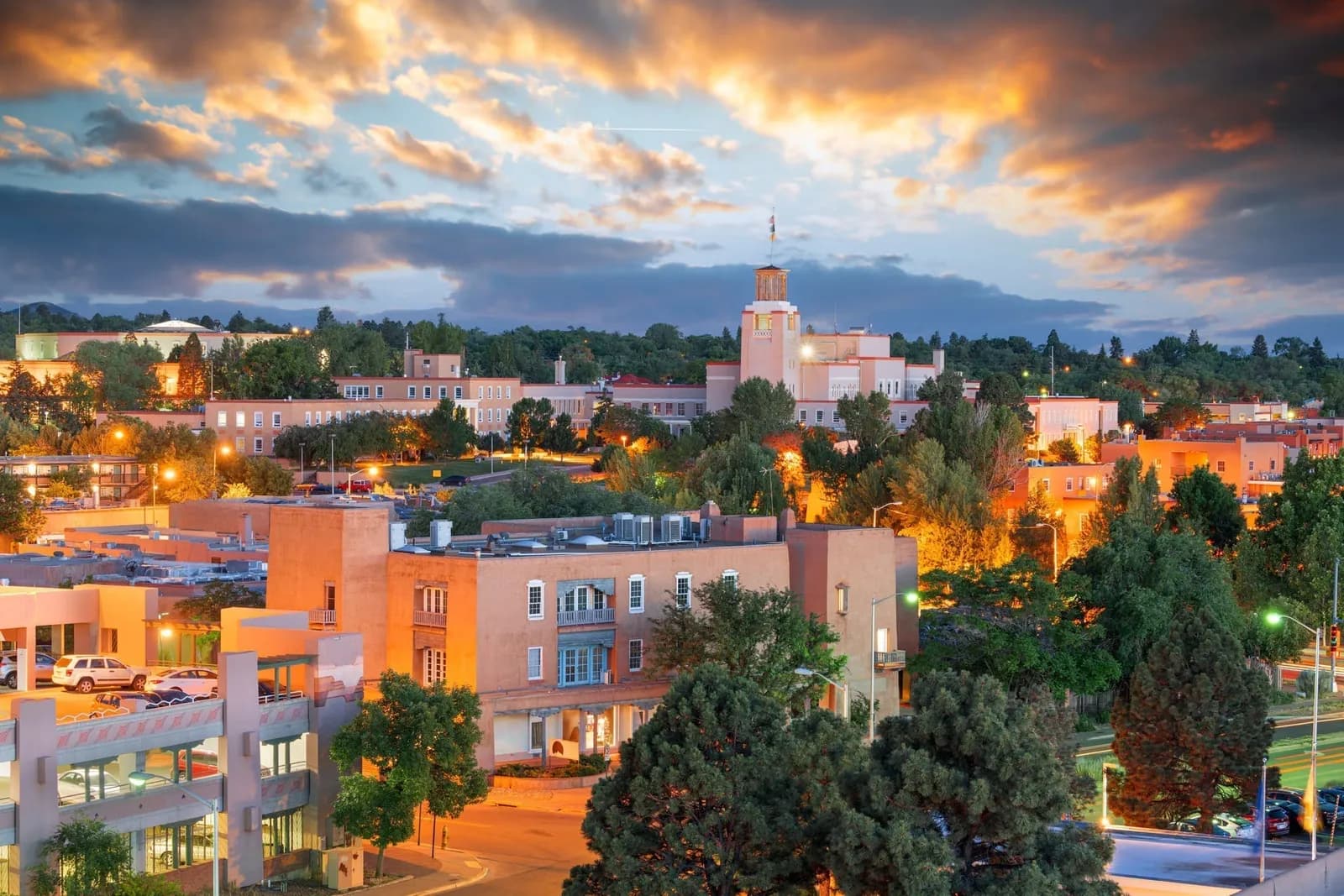
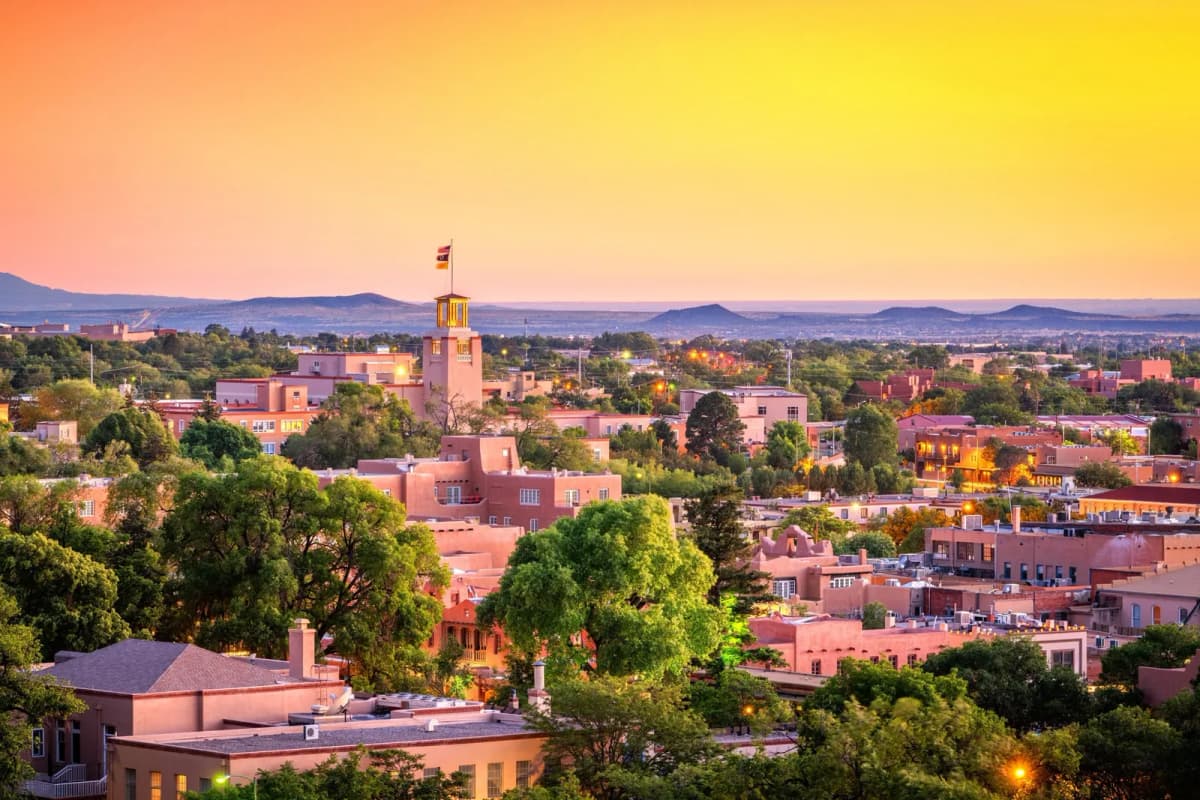
The retirement fantasy centers on adobe walls glowing at sunset, gallery walks on Friday evenings, and mountain views from your back patio. That vision isn't false. Santa Fe delivers on aesthetic promise. What it doesn't deliver is automatic financial compatibility with your retirement income structure.
Housing costs create the first friction point. According to Zillow's 2025 Home Value Index, Santa Fe's median home value sits around $570,000 to $600,000, compared to the national median of approximately $410,000 reported by the National Association of Realtors. For retirees drawing from pensions, Social Security, and retirement accounts with planned withdrawal rates, that $160,000 to $190,000 premium represents years of income compressed into a single purchase decision. The math shifts from “Can we afford this house?” to “Will this purchase leave enough liquidity for the next 20 to 30 years?”
The Physical and Logistical Realities of High Altitude Retirement
The altitude demands physical adjustment that vacation visits don't reveal. At 7,000 feet, thinner air affects stamina, sleep quality, and cardiovascular function. Some retirees adapt within weeks. Others struggle for months or discover that underlying health conditions intensify at elevation. You don't know which category you fall into until you're living there full-time, and by then, you've already committed capital to relocation.
Healthcare infrastructure matters more in retirement than during working years. Smaller metropolitan areas like Santa Fe offer fewer large hospital systems and specialty providers than major cities. Managing chronic conditions or accessing advanced care often requires travel to Albuquerque or beyond. That adds time, cost, and logistical complexity to medical needs that only increase with age.
The Social Cost Of Starting Over
Relocating severs established support systems. Friends who would check in during illness, family members nearby for emergencies, and familiar routines that provide structure. Building a new community takes intentional effort and time. Not everyone finds it easy to replicate the social infrastructure they left behind, particularly as mobility or transportation becomes limited.
The realization that cherished possessions or investments won't fund this lifestyle shift compounds the challenge. Too many retirees discover that collections, heirlooms, or assets they believed would provide a financial cushion have minimal resale value when liquidation becomes necessary. The gap between perceived value and actual market demand creates vulnerability, especially when higher living costs in destinations like Santa Fe require more liquidity than originally planned.
Balancing Emotional Appeal With Financial And Practical Realities
Financial decisions about retirement location aren't cut-and-dry. They're ragged and wet, tangled with emotional attachment to place, family considerations, health variables, and income sustainability. Scenic beauty enhances quality of life, but it doesn't guarantee your retirement funds will last or that daily logistics will feel manageable.
The question isn't whether Santa Fe is appealing. It's whether the financial and practical tradeoffs align with your specific income structure, health profile, and long-term needs. That requires looking past the postcard and examining how your budget actually functions against this destination's cost structure.
But knowing whether the numbers work requires understanding exactly where your money goes each month in this high-desert city.
Cost of Living: Can Retirement Income Support Santa Fe?

Those tradeoffs ultimately come down to a single practical question: can your retirement income comfortably support everyday life in Santa Fe, not just the dream of living there? The answer depends heavily on housing costs, income sources, and your budget's flexibility.
Santa Fe is not among the most expensive cities in the United States, but it is costly relative to its size, and significantly more expensive than many traditional retirement destinations.
Where Your Money Actually Goes
Housing is the primary driver. Whether buying or renting, shelter will likely consume the largest share of a retiree's budget. Home prices remain well above the national median, and rental availability can be limited. Property insurance and maintenance costs in a high-desert climate can also add up over time.
Property taxes and utilities are generally moderate compared with some coastal states, but they are not negligible. Heating costs can spike during winter, and cooling is still necessary during hot summer months due to the intense sun at high altitude.
The True Cost of Healthcare and Living in Santa Fe
Healthcare expenses deserve special attention. While Medicare covers many services, supplemental insurance, prescription costs, and out-of-pocket care can vary widely. Access to specialized treatment may involve travel to Albuquerque or other regional centers, increasing both time and expense.
Everyday living costs such as groceries, transportation, and services also tend to run above the national average. Santa Fe's smaller size means fewer big-box options and more reliance on local retailers, which can influence pricing.
The Tax Burden Most Overlooked
Taxes are another factor that retirees often overlook. New Mexico is considered moderately tax-friendly but not tax-free. The state does tax Social Security benefits for higher-income households, although exemptions and deductions are available for lower-income retirees, according to the New Mexico Taxation and Revenue Department. Pension income and withdrawals from retirement accounts may also be subject to state income tax, depending on circumstances.
The critical issue is not whether Santa Fe is affordable in absolute terms, but whether it is affordable relative to your specific income and how long that income must last. A Santa Fe Living Wage Study pegs a single adult's living wage at $2,226 per month, but that baseline doesn't account for healthcare premiums, travel, or the lifestyle amenities that often draw retirees to the area in the first place.
Income Structure Determines Sustainability
For retirees with substantial savings, strong pensions, or significant home equity, these costs may be manageable. For those relying primarily on Social Security or modest retirement accounts, the margin for error can be thin.
Stress-Testing Retirement Budgets Against Unexpected Realities
Most retirees approach this calculation by adding up projected expenses and comparing them to guaranteed income sources. That method works until unexpected costs surface: a major home repair, a chronic health condition requiring ongoing treatment, or inflation eroding purchasing power faster than anticipated.
Financial planning resources like retirement financial planning help retirees stress-test their budgets against real-world scenarios, accounting for variables like healthcare inflation, property maintenance cycles, and longevity risk that spreadsheets alone can't capture.
Evaluating Santa Fe Through The Lens Of Long-Term Affordability
The key issue is not whether Santa Fe is affordable in absolute terms, but whether it is affordable relative to your specific income and how long that income must last. Retirees who underestimate the cumulative impact of above-average costs across housing, healthcare, and daily expenses often find themselves adjusting their lifestyle downward within a few years, or worse, depleting savings faster than planned.
But the cost of living is only half the equation when evaluating whether this high-desert city truly fits your retirement vision.
Related Reading
Lifestyle Benefits That Attract Retirees

The decision to retire in Santa Fe rarely comes down to spreadsheets alone. People move here because the daily texture of life feels different. The question is whether those qualitative gains justify the financial premium, and whether they remain accessible as health and mobility shift over time.
A Climate That Supports Year-Round Activity
Santa Fe's high-desert environment delivers roughly 300 days of sunshine annually, with low humidity and temperatures that rarely reach extremes. Winter mornings might drop below freezing, but afternoons warm quickly under intense sun. Summers are comfortable compared to those in lower-elevation desert cities, with cooler nights that make air conditioning optional for many residents.
That consistency matters more than it sounds. For retirees managing arthritis, respiratory conditions, or simply wanting to stay active outdoors, predictable weather removes barriers. You can plan a morning walk in January without worrying about ice or oppressive heat. Gardens grow. Patios get used. Physical activity becomes easier to sustain when the weather doesn't constantly interfere.
Cultural Density That Keeps Minds Engaged
Few cities of Santa Fe's size offer comparable access to museums, galleries, opera, chamber music, film festivals, and Indigenous cultural events. The concentration of creative activity creates intellectual stimulation that many retirees find energizing rather than overwhelming. According to the Transamerica Institute Retirement Study, 44% of retirees report that their enjoyment of life has improved since retirement, often tied to newfound opportunities for cultural engagement and personal exploration.
This isn't about tourism. It's about having reasons to leave the house, encountering new ideas, and participating in a community that values creativity and learning. Cognitive health research consistently links social and intellectual engagement to slower cognitive decline. Santa Fe's cultural infrastructure makes that engagement accessible without requiring long commutes or expensive travel.
Outdoor Access Within Minutes
The Sangre de Cristo Mountains rise directly behind the city, offering trails ranging from easy walks to challenging alpine routes. Ski Santa Fe sits 16 miles from downtown. State parks, national forests, and scenic byways spread in every direction. For retirees who prioritize nature access, few places deliver this much variety this close to home.
Regular time outdoors correlates with lower stress, improved cardiovascular health, and better mental well-being. Those benefits compound over the years. The difference between living somewhere that requires a two-hour drive to reach nature versus stepping onto a trail in 15 minutes shapes how often you actually go. Proximity converts intention into habit.
A Pace That Reduces Pressure
Santa Fe operates at a slower rhythm than most metropolitan areas. Traffic jams are rare. Development remains controlled. Daily routines unfold with less urgency. For retirees leaving high-stress careers or crowded cities, that shift can feel like exhaling after holding your breath for decades.
The challenge is that slower doesn't mean simpler when you're managing healthcare appointments, home maintenance, or financial decisions across multiple income sources. Many retirees discover that the logistical complexity of retirement requires more active management than they anticipated, particularly around tax planning, withdrawal strategies, and ensuring income lasts. Resources like retirement financial planning help retirees stress-test their budgets against real-world scenarios specific to higher-cost areas, accounting for variables such as healthcare inflation, property maintenance cycles, and longevity risk that generic retirement calculators often miss.
Social Infrastructure That Takes Time To Build
The lifestyle benefits are real, but they don't automatically translate into community. Building a new social network in your 60s or 70s requires effort. Volunteering, joining clubs, attending events, and initiating conversations all take energy. Some retirees thrive in that process. Others struggle with isolation, particularly when mobility becomes limited, or they underestimate how closely their identity is tied to work relationships.
Santa Fe's appeal lies in its ability to support an active, engaged retirement for those with the health and resources to take advantage of it. The lifestyle benefits aren't luxuries. They're daily realities that shape physical health, mental engagement, and overall satisfaction. But they come with a price tag, both financial and logistical, that not every retirement budget can sustain indefinitely.
The question isn't whether these benefits exist. It's whether they remain accessible when health challenges surface and daily logistics become harder to manage.
Healthcare, Altitude, and Practical Daily Living
Those lifestyle advantages matter, but they exist within a physical and logistical environment that shapes how comfortably you can actually live here. Santa Fe's elevation, healthcare infrastructure, and transportation realities create daily frictions that don't show up in tourism brochures but become increasingly relevant as you age.
Altitude Affects More Than Stamina
At roughly 7,000 feet, Santa Fe sits high enough that oxygen levels drop noticeably compared to sea level. Your body has to work harder to perform the same tasks. Walking uphill feels steeper. Sleep patterns can be disrupted. Exercise tolerance decreases until you acclimate, if you fully acclimate at all.
For healthy retirees, this adjustment period might last a few weeks. For those with cardiovascular conditions, chronic obstructive pulmonary disease, or other respiratory issues, the impact can be more significant and persistent. According to guidance from the U.S. Centers for Disease Control and Prevention, older adults with pre-existing heart or lung conditions may experience more pronounced altitude-related effects, including shortness of breath, fatigue, and disrupted sleep patterns.
Healthcare Access Requires Planning
Santa Fe has hospitals, urgent care centers, and medical providers. It does not have the depth of specialized care available in larger metropolitan areas. Complex cardiac procedures, advanced cancer treatments, or rare condition specialists often require travel to Albuquerque, roughly 60 miles south, or even further for highly specialized care.
That distance matters more as health needs intensify. Managing a chronic condition that requires frequent specialist visits transforms a one-hour drive into a recurring logistical burden. Appointments consume half a day when you factor in travel time, waiting rooms, and recovery. If mobility becomes limited or driving becomes unsafe, you're dependent on others for transportation or expensive medical transport services.
Transportation Shapes Independence
Santa Fe's public transit system exists but operates on a limited scale compared to major cities. Most daily activities require a car. Grocery stores, medical appointments, social events, and recreational areas spread across a geography designed for personal vehicles, not walkability or comprehensive transit networks.
When driving becomes difficult due to vision changes, declining reaction time, or medical conditions, maintaining independence becomes harder. Unlike cities with extensive subway systems, frequent bus routes, or robust ride-sharing infrastructure, Santa Fe offers fewer alternatives. You rely on personal networks, volunteer driver programs, or expensive private services.
Daily Logistics Compound Over Time
Routine tasks require more effort when you're managing altitude, limited healthcare access, and car-dependent geography simultaneously. A minor health issue that would be a quick doctor visit in a larger city might require a half-day trip to Albuquerque. Picking up prescriptions, attending physical therapy, or scheduling diagnostic tests all involve more planning than in denser metropolitan areas.
Many retirees underestimate the mental energy required to manage these logistics, particularly as health needs increase. Resources like retirement financial planning help retirees stress-test not just their budgets but their daily operational capacity, accounting for how healthcare costs, transportation needs, and accessibility challenges compound over time in higher-cost, lower-density areas.
Related Reading
Who Santa Fe is Actually Best (and Worst) For
The right retirement location isn't the one that looks best in photographs. It's the one where your financial structure, health trajectory, and daily preferences align without forcing compromises that erode security or satisfaction over time. Santa Fe works exceptionally well for specific retirees and creates persistent strain for others.
Financial Flexibility Determines Viability
Retirees who arrive with substantial home equity, diversified retirement accounts, or pension income that exceeds basic living expenses can absorb Santa Fe's cost premium without jeopardizing long-term stability. When housing consumes 25% of your monthly budget instead of 40%, you maintain a cushion for healthcare surprises, property maintenance cycles, and inflation that compounds over decades.
Those operating on fixed incomes with limited savings face a different calculation. Social Security alone rarely covers Santa Fe's housing and living costs comfortably. The margin between monthly income and expenses narrows to the point where a single unexpected cost (a major home repair, an unplanned medical procedure, or a vehicle replacement) can trigger financial stress that doesn't resolve quickly.
Health Status Shapes Daily Experience
Santa Fe rewards retirees who arrive in good physical condition and can maintain activity levels that take advantage of outdoor access, cultural events, and social opportunities. If you can hike moderate trails, drive comfortably in varied conditions, and handle altitude without persistent fatigue, the city's lifestyle benefits remain accessible.
Retirees managing chronic conditions requiring frequent specialist care face logistical burdens that compound over time. Driving to Albuquerque for cardiology appointments, oncology treatments, or advanced diagnostic procedures transforms healthcare from a routine task into a recurring disruption. That distance matters more when mobility declines or when winter weather makes travel hazardous.
Cultural Priorities Versus Urban Infrastructure
Retirees who prioritize museums, galleries, live performances, and Indigenous cultural experiences over shopping variety, nightlife, or major sports venues will find Santa Fe's cultural density unusually rich for a city of its size. The concentration of creative activity provides intellectual stimulation and social engagement that many find more fulfilling than the offerings of metropolitan entertainment.
Employment opportunities for retirees seeking part-time work or consulting income are also limited compared to larger metros. The local economy centers on tourism, government, arts, and healthcare. Professional services, technology, and corporate sectors that often provide flexible retirement work exist on a smaller scale.
Social Adaptability and Isolation Risk
Building a new community in retirement requires intentional effort regardless of location, but smaller cities like Santa Fe demand more proactive engagement. Social networks don't form automatically. Volunteering, joining clubs, attending events, and initiating conversations all require energy that some retirees underestimate after leaving structured work environments.
Retirees comfortable with solitude, self-directed activities, and smaller social circles often thrive. Those who depend on frequent family contact, established friend networks, or the ambient social energy of dense urban environments may struggle with isolation, particularly if mobility becomes limited or if driving long distances to visit family becomes burdensome.
Stress Testing Retirement Locations for Long-Term Needs
The practical reality is that retirement destinations perform differently depending on who you are when you arrive and how you change over the following decade. Most retirees approach location decisions by evaluating costs and amenities.
Fewer stress tests how the location functions when health declines, when social energy wanes, or when the financial cushion that felt adequate at 65 feels thin at 78. Retirement financial planning helps retirees model these scenarios before committing capital, accounting for how healthcare costs, transportation dependencies, and lifestyle adjustments compound in higher-cost, lower-density areas where alternatives narrow as you age.
The Mismatch Most Don't Anticipate
The retirees who struggle most in Santa Fe aren't necessarily those with the lowest incomes or the most health challenges. They're the ones whose expectations don't align with operational reality. They imagined a slower pace would mean less complexity. They assumed natural beauty would compensate for limited healthcare access. They believed cultural richness would automatically translate into social connection.
Santa Fe delivers on its aesthetic and cultural promises. What it doesn't do is simplify the logistics of aging, reduce the cost of living to match modest retirement incomes, or eliminate the physical demands of high-altitude living. The city works beautifully for retirees whose financial resources, health status, and lifestyle preferences naturally align with what it offers. For others, the gap between expectation and daily reality creates friction that doesn't resolve with time.
But making that calculation accurately requires more than intuition or vacation impressions.
How Smart Financial Lifestyle Helps You Choose the Right Retirement Destination

Choosing where to retire is less about finding the most beautiful place and more about building a financial structure that can support your choice for 20 or 30 years. The decision looks emotional, but it's a long-term commitment that balances income durability, healthcare inflation, tax efficiency, and withdrawal sustainability across market cycles you can't predict.
Smart Financial Lifestyle addresses this by focusing on the financial foundation that determines which locations become genuinely viable options rather than aspirational gambles.
Experience Translated Into Accessible Frameworks
The guidance draws on Paul Mauro's perspective, a wealth management professional with over 50 years in the industry who managed more than $1 billion in assets during his career. His work centered on helping clients navigate retirement transitions, including relocation decisions, income sustainability, and portfolio longevity across different economic environments.
That experience matters because it comes from real-world planning, not theoretical models. Mauro spent decades balancing competing priorities: maintaining lifestyle quality, managing downside risk, and ensuring assets would last through uncertain lifespans and market conditions. His books translate those professional strategies into practical frameworks that individuals can apply independently, covering withdrawal planning, inflation protection, asset allocation, and contingency planning without requiring financial industry expertise to understand.
Beyond Basic Budgeting for Retirement Location Decisions
Most retirees approach location decisions by comparing housing costs and estimating monthly expenses. That method breaks down when unexpected costs surface: a major home repair, a chronic health condition requiring ongoing treatment, or inflation eroding purchasing power faster than anticipated.
Retirement financial planning helps retirees stress-test their budgets against real-world scenarios before committing capital, accounting for how healthcare costs, transportation dependencies, and lifestyle adjustments compound in higher-cost areas where alternatives narrow as you age.
Knowledge that Evolves With Your Circumstances
Complementing the books is a library of free YouTube content covering retirement income planning, investing fundamentals, and long-term financial independence. This allows retirees to deepen their understanding continuously as their circumstances shift.
Early retirement questions about withdrawal rates give way to mid-retirement concerns about healthcare costs, which eventually shift to late-retirement estate planning considerations. The content adapts to those changing priorities rather than treating retirement as a single static phase.
The Overarching Focus is Durability
A retirement plan isn't just about the first few years after leaving work. It must withstand decades of expenses, market volatility, health changes, and unexpected events. By strengthening the financial side of the equation, retirees gain the flexibility to choose locations based on genuine preference rather than constraint or desperation.
Financial Clarity Creates Geographic Freedom
When your income structure can absorb above-average costs without forcing constant budget vigilance, Santa Fe becomes a choice rather than a risk. When your healthcare budget includes specialist travel and supplemental insurance, altitude and distance from major medical centers become manageable trade-offs rather than dealbreakers. When your withdrawal strategy anticipates inflation spikes and market downturns, you don't panic three years into retirement because your cushion disappeared faster than expected.
The retirees who struggle most with location decisions aren't necessarily those with the lowest incomes. They're the ones whose financial planning didn't account for how costs compound over time in higher-expense areas, or how healthcare needs intensify as mobility declines, or how social isolation increases when you can't afford the activities that drew you to the location initially.
The Long-Term Realities of Retirement Location Planning
Financial decisions about retirement location aren't cut-and-dry. They're ragged and wet, tangled with emotional attachment to place, family considerations, health variables, and income sustainability that shifts as you age. Scenic beauty enhances quality of life, but it doesn't guarantee your retirement funds will last or that daily logistics will feel manageable a decade from now.
The calculation requires looking beyond the postcard and examining how your specific income structure aligns with a destination's cost profile, healthcare infrastructure, and accessibility requirements as you move from your 60s into your 70s and 80s. That's not a vacation decision. It's a financial commitment that shapes everything that follows.
But knowing whether the numbers work is only the beginning of building a retirement that actually lasts.
Related Reading
Dividend Investing for Retirement
Interest vs Dividends
7 Reasons You Should Rent a Home in Retirement
Modern Retirement Planning
Retirement Home vs Nursing Home
Best Towns to Retire in North Carolina
How Is Spousal Support Calculated After Retirement
Kickstart Your Retirement Financial Planning Journey | Subscribe to Our YouTube and Newsletter
If you want confidence that your retirement location is financially sustainable, not just attractive, Smart Financial Lifestyle provides the tools and guidance to make decisions that protect your long-term security. Subscribe to our YouTube and Newsletter today to access proven strategies from Paul Mauro's decades of experience and plan a retirement that works in the real world, not just on paper.